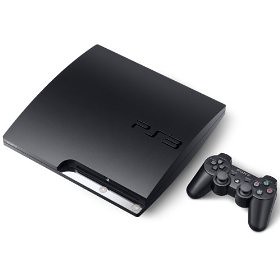
It is real. Almost 4 years after its launch, the PlayStation 3's much vaunted security has finally been completely and unequivocally compromised. Within weeks, if not days, PS3 users ready to pay an exorbitant premium have the option of copying all the games they own - and any they don't - onto hard disk, and zip stops them from spreading them across the internet. You think that, just how do Sony deal with the problem? Can new firmware updates maintain the platform holder one step ahead of the hackers?

As sample "PS Samurai" hardware circulates around shops and modship suppliers around the world, further details emerge, giving us some understanding of how the system works. From that we can extrapolate the size of the task facing Sony because it embarks on what must surely be the biggest damage limitation exercise in its recent history. This attack on PStation security includes both software and hardware. A USB dongle is attached to the P3, and pressing the eject button on the console while it cold-boots causes the code on the stick to override the console's typical launch procedure. By analyzing views of the XMB witnessed in the now numerous YouTube videos, the dongle seems to inject elements from debug PS3 firmware onto the retail unit. The option to install PKG files, available only on development and test units, now works on the retail machine. From here, the main tool to "backing up" software is added onto the machine.

While you might not be familiar with a PKG file before, the chances are that you've installed plenty of them on your Playstation 3. Just about every type of program you download from PSN is incorporated in the PKG container. Once downloaded, the PS3 decompresses the data and installs it onto your PS3. On development and test/reviewer units, so-called "unsigned code" is routinely distributed on disc, via download or on USB flash drives in PKG format. The only difference between this and a regular PSN download is the fact that code isn't encrypted, enabling easier distribution of unfinished or review copy games (only Sony's mastering labs can encrypt, or "sign" code). The fact that the Install PKG option now appears on a retail unit gives us a strong indication as to how the new "Jailbreak" works as it's probably not present in the regular firmware. It suggests that elements of the bespoke system updates used on the debug PS3s are being injected into the memory of the retail unit. But exactly how?
There are two potential explanations here. For starters, whoever is behind this is extremely clever and has isolated an exploit that allows for the injection of code over the USB port. More likely is that the USB-based tools Sony uses to test and recover PS3s with corrupt firmware have been leaked and reverse-engineered for more nefarious ends. PlayStation 3s locked into "factory service mode" have already been popping up every now and then for a long time, and the PC-side software that runs the USB dongle was leaked not long ago.
Now it would appear that the hardware has additionally been "liberated" from Sony's repair and test labs. This could sound somewhat implausible, but in a world where PS3 Slim photos circulate months before the launch and final units can be found in a Philippines marketplace, anything may be possible. Besides, the very same thing happened with the tools used to service the PSP right before the PSP-2000 launch in September 2007. In terms of the make-up of the dongle itself, pictures posted online of the internals show a simple USB device - what appears like an innocuous 48-pin microcontroller chip on the tiny PCB and not much else. It's quite astonishing to believe that the makers are requesting a colossal $130 for such a tiny piece of tech, and it's almost certain to be reverse-engineered, ripped off and duplicated by Chinese mass-suppliers within days of showing up in the market.
The software side of PS Samurai is freely available to download, installs onto a debug PS3 and throws up few surprises. It's quite a basic tool that rips off every single file on a game disc onto the internal HDD or else onto a USB flash drive or hard disk drive. It does appear that part of the encryption Sony uses on the files is stripped away (hashes on encrypted files change drastically), but the executable still won't work with no USB dongle in place. When picking a game to run, the machine drops back to the XMB. From now on, we could only speculate but it's reasonable to assume that the chip then diverts all major disc functions to the device in which the game-rip lies. As a vehicle for piracy then, all bases are covered, but is this really a "jailbreak" in the form recently sanctioned by the US courts? The mere existence of the backup manager - supposedly coded with tools stolen from Sony - indicate otherwise, and if the USB dongle is indeed cloned from the platform holder's own recovery tools, any pretence of legality is surely a joke.
The existence of the PKG installation option does indeed imply that the likes of emulators and media players could be ported and installed on to the PS3. However, in the meantime it's almost certainly the case that Sony's own dev tools would be needed to make any type of useful application, adding to the legality quagmire. All told, it's a nightmare scenario for Sony - but you could be fairly sure that its response will probably be swift. We can fully expect a mandatory firmware update to emerge from its engineering labs within days of the firm dissecting the hack, doubtless making it useless. Damage limitation could be the key, and similar to the OtherOS removal that Geohot's exploit brought about, Sony might be planning to minimise the physical number of consoles available capable of running the hack by effectively upgrading them out of contention.
If it turns out the memory patch theory does work, the swiftness of the response shouldn't be a problem for Sony's engineers. Changing the make-up of the modules affected could well be child's play for the platform holder also it would almost definitely necessitate a higher effort for the hackers to reverse-engineer the newest code and re-patch it. Additionally, over the long run, there's nothing to prevent Sony from introducing new varieties of encryption and execution in the process that future games boot.
However, the properties of the USB dongle itself are probably more complicated to defend against. Assuming that the unit itself comes from Sony's own servicing tools, this could demand a complete, brand-new revision of motherboard to successfully defeat. The main purpose of the dongle is to restore corrupt firmware - the chances are it has to operate on a hardware level that can't be touched by the updater. We've seen it before on Sony kit - the so-called "Pandora" battery for PSP that flips it into service mode operates on the same principle, and was only defeated by the platform holder when it revised the handheld's motherboard. Nothing could possibly be done to protect the existing devices.
Unless Sony is capable of rewriting the standard low-level code relating to the PS3's BIOS, there's little it can do to defeat the USB vector of attack - it's all about preventing the injected code from working. Moving forward we can expect the usual cat and mouse game between hackers and platform holder to unfold, and it's not beyond the realms of possibility that in the foreseeable future, Sony will be able to detect users of the device and rightfully ban them from accessing PSN, just like measures Microsoft is constantly on the undertake annually against gamers who flash their DVD drives to run copied software.
The complexity of Sony's security systems suggests that it will be able to keep one step ahead, however, there is nothing to stop people utilizing the hack to prevent firmware upgrades from taking place. Indeed, the chip itself is said to protect the console from executing system updates. This of course precludes PSN access, and in the fullness of time this approach will stop newer PS3 games from running as they'll be reliant on software elements found only inside newer firmware. Bearing in mind that PS Samurai is retailing for upwards of $130, there's quite a strong possibility that this may be the most expensive and short-lived hack ever made, and factoring in the simplicity of the hardware, the very high price seems almost reminiscent of a smash-and-grab raid on users intent on piracy regardless of what the price. The manufacturers of PS Samurai are charging so high price since the time frame with regards to exclusivity and the longevity of the hack itself is potentially very small.

Having said that, the exact properties for the USB stick and how future-proof its remain unknown. With mass-production of PS Samurai now in motion, and the first retail devices apparently set to ship before the month comes to an end, Sony's engineers are doubtless getting ready for the battle coming.
Source: Gamersrealm
